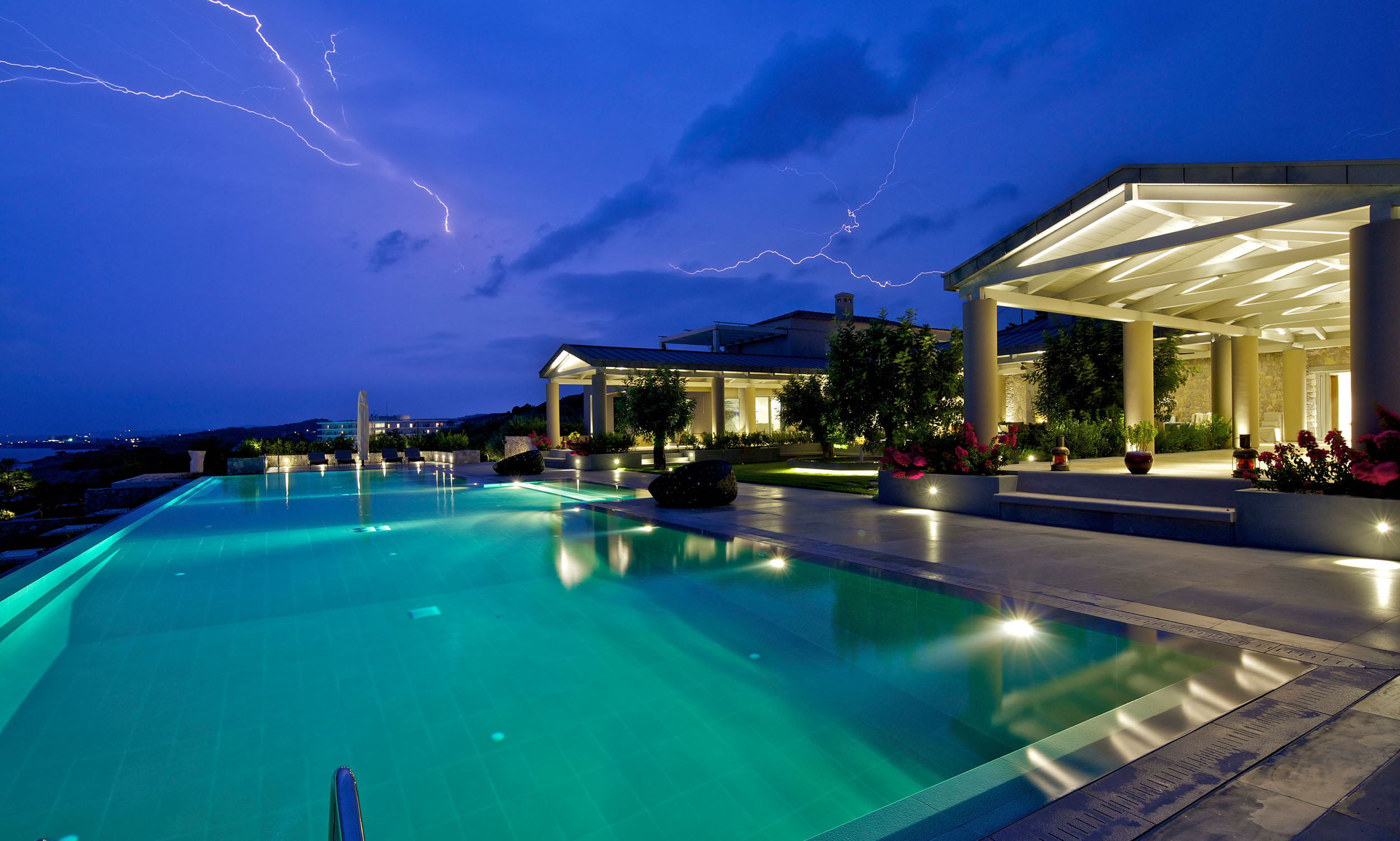
“Κάποτε πηγαίναμε για μπάνιο στη Γλυφάδα, στη Βούλα, στη Βουλιαγμένη ή στο Καβούρι. Τώρα δεν επιτρέπεται πια να το λέμε έτσι. Είναι πολύ απλό. Πολύ παλιό. Πολύ φτηνό.
Τώρα πηγαίνουμε στην «Αθηναϊκή Ριβιέρα».
Διότι στην Ελλάδα του 21ου αιώνα δεν αρκεί να έχεις θάλασσα. Πρέπει η θάλασσα να έχει brand name. Δεν αρκεί να έχεις διαμέρισμα. Πρέπει να έχεις residence. Και φυσικά δεν αρκεί να έχεις μια πολυκατοικία με θέα στον φωταγωγό. Πρέπει να τη διαφημίζεις ως luxury coastal living.
Αν προσθέσεις και τη λέξη «Riviera», η τιμή ανεβαίνει αμέσως κατά 40%. Αν βάλεις και το «exclusive», μπορείς να πουλήσεις ακόμη και το ημιυπόγειο ως «ιδιωτικό καταφύγιο αστικής πολυτέλειας».
Ο πολίτης μετατρέπεται σε πελάτη στον ίδιο του τον τόπο. Και φυσικά όλα αυτά γίνονται στο όνομα της «ανάπτυξης». Δεν μας λένε ποιος αναπτύσσεται και ποιος εκτοπίζεται. Ποιος κερδίζει και ποιος χάνει. Ποιος αγοράζει θέα στη θάλασσα και ποιος χάνει την πρόσβαση σε αυτήν. Η λεγόμενη αναβάθμιση συχνά σημαίνει ότι ένας τόπος γίνεται ωραιότερος για εκείνον που μπορεί να τον αγοράσει και απρόσιτος για εκείνον που ήδη ζούσε εκεί.
Κάπως έτσι γεννιέται και ο νέος κάτοικος της «Ριβιέρας». Δεν πήγε για μπάνιο στη Βούλα. Απόλαυσε coastal lifestyle. Δεν ήπιε καφέ στο Καβούρι. Είχε seaside experience. Δεν αγόρασε ένα υπερτιμημένο διαμέρισμα στο Ελληνικό. Έκανε strategic investment σε παγκόσμιο προορισμό.
Η περιοχή, βέβαια, ήταν πάντα όμορφη. Όμως εμείς δεν εμπιστευόμαστε την ομορφιά, αν δεν έχει ξενική ονομασία.
Ζούμε την εποχη του νεοπλουτισμού.
Ο νεόπλουτος δεν πάει στη θάλασσα. Ζει μια αλλη εμπειρία.
Δεν πίνει καφέ. Απολαμβάνει ένα premium coffee moment.
Δεν τρώει ψάρι. Δοκιμάζει μια curated seafood experience.
Η λέξη «Ριβιέρα» έχει αποκτήσει σχεδόν μεταφυσικές ιδιότητες.
Και φυσικα δεν υπάρχει πλέον απλός κάτοικος. Υπάρχει «resident of the Riviera». Άνθρωπος που μέχρι χθες έλεγε «μένω κάτω στη Γλυφάδα» και σήμερα το προφέρει σαν να διαθέτει εξοχικό ανάμεσα σε Κάννες και Σεν Τροπέ. Μπορεί να χρωστάει τρεις δόσεις στην πιστωτική, αλλά όταν περπατά στην παραλιακή αισθάνεται ότι του ανήκει τουλάχιστον μία μαρίνα.
Η αλήθεια είναι ότι η Αθήνα δεν χρειάζεται τέτοια κόμπλεξ. Δεν χρειάζεται να μιμηθεί τη Νίκαια, το Μονακό ή τις Κάννες. Μπορεί να σταθεί μια χαρά με το δικό της όνομα, τη δική της θάλασσα και τη δική της φυσιογνωμία.
Η αξία της δεν μεγαλώνει επειδή την αποκαλούμε «Ριβιέρα». Μεγαλώνει μόνο η τιμή.
Άλλωστε, η πραγματική πολυτέλεια δεν είναι να λες ότι κατοικείς στη Ριβιέρα.
Είναι να μπορείς να φτάσεις στη θάλασσα, να απλώσεις την πετσέτα σου και να μη χρειαστείς μικρό καταναλωτικό δάνειο για δύο ξαπλώστρες και έναν καφέ.
The Greek government has formally adopted a new, and long-awaited, national development framework to guide tourism investment around the country with the aim of ensuring the future sustainability of the sector.
The joint ministerial decree sets planning rules that seek to balance tourism development with protections for the environment, local communities and the unique cultural characteristics of destinations.
Greece is one of the world’s Top 10 tourism destinations with the tourism sector accounting for roughly one-fifth of Greece’s economy. It has hosted a steadily growing number of visitors each year and in 2025 attracted a record 38 million visitors and collected almost €24 billion in travel receipts. Consequently, Greece has also attracted significant foreign investment to its hospitality sector with hundreds of new hotels opening over the last several years and, by some estimates, approximately €12 billion in hotel investments.
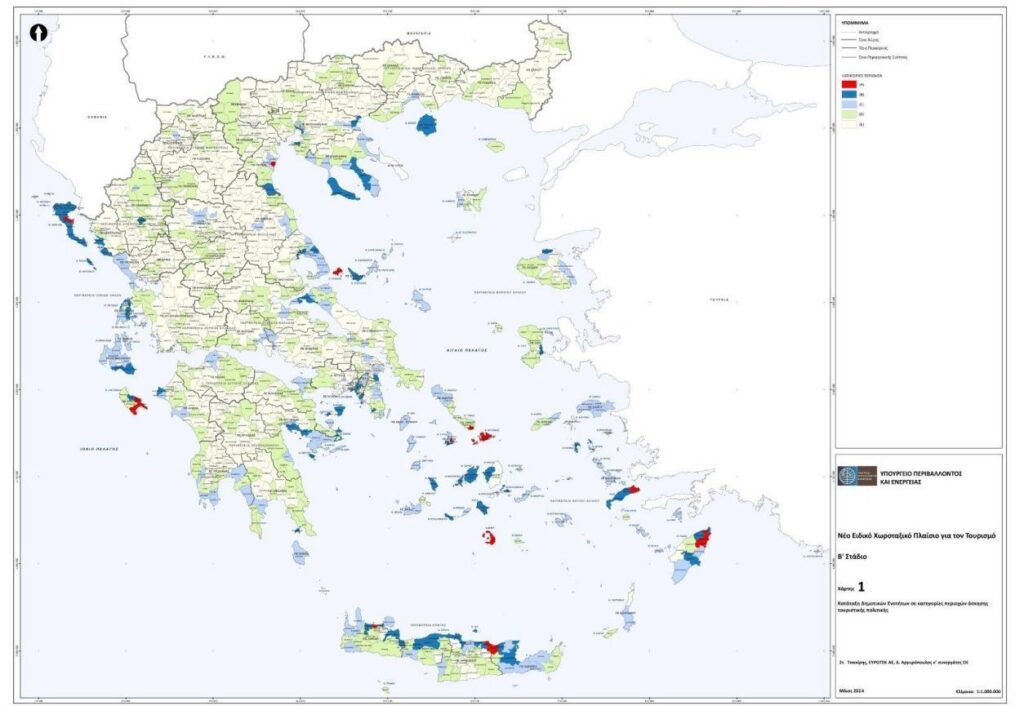
In an effort to diversify Greece’s tourism destinations and its tourism product, the new Special Spatial Framework for Tourism creates five categories for the country’s mainland areas, and three classifications for the islands based on the level of existing tourism activity. Taking into account factors like number of accommodations, land area and resident population, the classifications set conditions for further tourism development. This includes the types of projects permitted and, for new hotel or related investments, sets thresholds for minimum land requirements, capacity to accommodate visitors and environmental protections, among other things.
Areas are divided into five categories:
• A: Controlled Development Areas
Areas with very high tourism pressure, where priority is given to upgrading existing accommodation and stricter rules apply to new tourism developments. New hotels built outside town plans will require a minimum land plot of 16 stremmas (1.6 hectares). • B: Developed Areas
Areas where tourism development continues with fewer restrictions and greater emphasis on quality upgrades, special-interest tourism and modern infrastructure. New hotels built outside town plans will require a minimum land plot of 12 stremmas (1.2 hectares). • C: Developing Areas
Areas where additional tourism development is encouraged in order to gradually strengthen the local tourism product. • D: Early Development Areas
Areas where the focus is on mild tourism growth and the development of new destinations based on local characteristics. • E: Special Development Enhancement Areas
Areas mainly intended for special forms of tourism such as mountain, wellness, marine and diving tourism.
Share the post "Greece Adopts New Special Spatial Framework for Tourism"
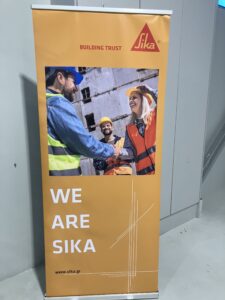
Θα ήθελα να ευχαριστήσω θερμά την εταιρεία Sika Hellas για την πρόσκληση και την υπέροχη παρουσίαση του έργου, στις εγκαταστάσεις της στο Κρυονέρι, αλλά και για την εξαιρετική φιλοξενία της. Οι άνθρωποι της εταιρείας, μοιράστηκαν μαζί μας το όραμά τους και επιβεβαίωσαν γιατί κατέχουν ηγέτιδα θέση στην καινοτομία, την έρευνα και την πρωτοπορία.
παναγιώτης τούτος
Το κτίριο του Ηλεκτρικού Σταθμού στο Τεχνολογικό και Πολιτιστικό Πάρκο Λαυρίου (ΤΠΠΛ) του Εθνικού Μετσόβιου Πολυτεχνείου υποδέχεται το Εθνικό Υπερυπολογιστικό Σύστημα «Δαίδαλος» του Εθνικού Δικτύου Τεχνολογίας και Έρευνας (ΕΔΥΤΕ – GRNET). Το διεθνούς σημασίας αυτό έργο θα εγκατασταθεί σε ένα από τα μνημειακά βιομηχανικά κτίρια της πρώην Γαλλικής Εταιρείας Μεταλλείων Λαυρίου. Εντός του θα δημιουργηθούν οι απαραίτητες συνθήκες και υποδομές για την υποδοχή του συστήματος «Δαίδαλος». Ο σχεδιασμός ανταποκρίνεται σε υψηλές αισθητικές και κατασκευαστικές απαιτήσεις, καθώς ο χώρος θα είναι ανοιχτός και στο κοινό, προς επίσκεψη τόσο του Υπερυπολογιστή όσο και του ίδιου του διατηρητέου κτιρίου και του βιομηχανικού του εξοπλισμού.
Η ιστορική και τεχνική σπουδαιότητα του κτιρίου του Ηλεκτρικού Σταθμού της Γαλλικής Εταιρείας Μεταλλείων Λαυρίου, ενός εκ των δύο πρώτων εργοστασίων παραγωγής ηλεκτρικής ενέργειας τα οποία λειτούργησαν στην Ελλάδα, όπως και το ισχυρό θεσμικό πλαίσιο προστασίας του, επέβαλε λεπτομερή ιστορική ανάλυση, καθώς και πλήρη αρχιτεκτονική και στατική αποτύπωση. Σε συνέχεια της ιστορικής και κατασκευαστικής τεκμηρίωσης εκπονήθηκαν η αρχιτεκτονική, δομοστατική και Η/Μ μελέτη -με κύριο μέλημα την προστασία και ανάδειξη του συνόλου, αισθητικά, στατικά και λειτουργικά. Η συνεργασία ΕΜΠ και ΕΔΥΤΕ για την αποκατάσταση και επανάχρηση του πρώην Ηλεκτρικού Σταθμού.
Οι ειδικές συνθήκες που απαιτεί ο «Δαίδαλος» υποδεικνύουν τη δημιουργία ενός νέου κελύφους εντός του κτιρίου του πρώην Ηλεκτρικού Σταθμού. Το κέλυφος είναι ελλειπτικού σχήματος προκειμένου να επιτευχθεί η ομαλή ένταξή του στο υφιστάμενο κτίριο, ενώ η διαφανής, υάλινη υλικότητά του μεγιστοποιεί την οπτική επαφή με τις εγκαταστάσεις του Υπερυπολογιστή, φορτίζοντας συμβολικά τη νέα χρήση. Η κατασκευή του θα εξυπηρετεί τη διατήρηση σταθερής θερμοκρασίας, την προστασία από εξωγενείς παράγοντες και τον έλεγχο προσβασιμότητας εντός του χώρου του υπολογιστικού συστήματος. Εκτός των βασικών υποδομών δημιουργούνται χώροι περιήγησης, ξενάγησης, έκθεσης και εργασίας. Μέσα από την υποδοχή του συστήματος «Δαίδαλος», τα έργα αποκατάστασης προσβλέπουν στην ανάδειξη του εμβληματικού κτιρίου του πρώην Ηλεκτρικού Σταθμού, με όρους λειτουργικότητας, αισθητικής και βιωσιμότητας. Το έργο, τέλος, περιλαμβάνει την ανάδειξη και λειτουργική επανάχρηση του περιβάλλοντος χώρου. Η ταυτότητα του είναι απολύτως συμβατή τόσο με τον ερευνητικό-τεχνολογικό και πολιτιστικό χαρακτήρα του πάρκου όσο και με τη μνημειακότητα του χώρου. Ένα κτίριο που κατασκευάστηκε για μία καινοτόμο χρήση, στις αρχές του 20ου αιώνα, την παραγωγή ηλεκτρικής ενέργειας, αναβιώνει με μία εξίσου πρωτοποριακή τεχνολογική χρήση, την εγκατάσταση ενός εθνικής και διεθνούς εμβέλειας υπερυπολογιστικού συστήματος, του «Δαίδαλος».
Η ταυτότητα της ομάδας μελέτης
Εθνικό Δίκτυο Υποδομών Τεχνολογίας και Έρευνας & Εθνικό Μετσόβιο Πολυτεχνείο
Εγκατάσταση Εθνικού Υπερυπολογιστή «Δαίδαλος»
Αποκατάσταση και Επανάχρηση Κτιρίου πρώην Ηλεκτρικού Σταθμού στο ΤΠΠΛ
Η εικόνα: Τάση Παπαϊωάννου, Τοπίο της φαντασίας, ακρυλικό σε χαρτί
του Τάση Παπαϊωάννου
(Αρχιτέκτων, ομότιμος καθηγητής Σχολής Αρχιτεκτόνων ΕΜΠ)
[4.7.2024]
«Πες μου ποιος είσαι να σου πω πώς κτίζεις – πες μου πώς κτίζεις να σου πω ποιος είσαι».
Άρης Κωνσταντινίδης
Ζούμε σε μια εποχή όπου ο άκρατος καταναλωτισμός αποτελεί τη νέα παγκόσμια θρησκεία. Ο άνθρωπος έχει συνδέσει την ευημερία και την ευτυχία του, αποκλειστικά με το πόσα αγαθά καταναλώνει, ανεξάρτητα αν αυτά του είναι απαραίτητα ή όχι για τη διαβίωσή του. Έχει κατισχύσει σχεδόν παντού, ως κυρίαρχη κουλτούρα των κοινωνιών μας, το δόγμα: «καταναλώνω, άρα υπάρχω».
Σταδιακά οι κοινωνίες μας μεταλλάσσονται σε ασύνδετα μεταξύ τους σύνολα, ανικανοποίητων ατόμων ή όπως έλεγε ο Οκτάβιο Πας σε «συνάξεις μοναχικών ανθρώπων». Ανθρώπων οι οποίοι διακατέχονται από τη μανία της αγοράς καινούργιων προϊόντων, προϊόντων τα οποία κάνουν σχεδόν καθημερινά την εμφάνισή τους και προβάλλονται ως τα νέα πρωτοποριακά και επαναστατικά επιτεύγματα της τεχνολογίας. Κάποιοι που έχουν την οικονομική άνεση τα αγοράζουν, ενώ ταυτόχρονα δημιουργούν σε όλους τους υπόλοιπους, το σύνδρομο της στέρησης και της επιτακτικής “ανάγκης” να τα αποκτήσουν πάση θυσία κι αυτοί. Η αγορά του αχρείαστου αντικειμένου, δημιουργεί αντίθετα απ’ ότι θα περίμενε ίσως κανείς, την αύξηση της καταναλωτικής μανίας, συνθλίβοντας τον άνθρωπο μέσα στα γρανάζια ενός φαύλου κύκλου διαρκώς νέων αγορών, δημιουργώντας εν τέλει απολύτως εξαρτημένα και χειραγωγούμενα άτομα. Άτομα που βυθίζονται μέσα σ ’έναν ολέθριο ατομικισμό και εγκλωβίζονται, ολοένα και περισσότερο, στα ασφυκτικά και περιχαρακωμένα όρια ενός μοναχικού Εγώ.
Η καταναλωτική ανεξέλεγκτη βουλιμία, ως αυτοσκοπός, έχει καθορίσει εδώ και χρόνια και την αρχιτεκτονική πρακτική. Η κατοικία (και όχι μόνο) έχει μετατραπεί σε εμπόρευμα και αντιμετωπίζεται ως κοινό καταναλωτικό προϊόν. Αρκεί να επισκεφτεί κανείς τα νότια και βόρεια προάστια της Αττικής (Γλυφάδα, Βούλα – Βριλήσσια, Χαλάνδρι), για να διαπιστώσει το είδος της αρχιτεκτονικής που χτίζεται στις περιοχές αυτές τα τελευταία χρόνια. Απίθανες πολυκατοικίες, γεμάτες στολίδια και περιττά επιθέματα, όπου η μια ανταγωνίζεται την άλλη σε κακογουστιά και εκζήτηση. Δεν υπάρχει κανένας κανόνας που στοιχειωδώς να συγκροτεί και να προδιαγράφει τον αρχιτεκτονικό σχεδιασμό τους. Τα κτίρια πια μοιάζουν με παχύρευστες τούρτες, όπου το μόνο που ενδιαφέρει τους σχεδιαστές τους, είναι η επιδειξιμανία του φανταχτερού, του πομπώδους, του κραυγαλέου και του προκλητικού.
Η προσπάθεια είναι το νέο κτίριο να διαφοροποιηθεί με κάθε τρόπο από τα γειτονικά του και να μη θυμίζει σε τίποτε αυτά που προϋπήρξαν, αφού ο μοναδικός στόχος είναι να «πουλήσει» (και μάλιστα πολύ ακριβά) στον μελλοντικό καταναλωτή-ιδιοκτήτη. Ακατανόητες και άχρηστες καμπύλες, εμφανίζονται πάνω στις όψεις των νεότευκτων «αρχιτεκτονημάτων». Ένα θλιβερό δειγματολόγιο από κάθε είδους καμπύλες, κυρτές ή κοίλες, συνεχόμενες ή διακοπτόμενες, περιστρέφονται γύρω από τα κτίρια, χωρίς κανένα απολύτως νόημα. Συστρέφονται σαν σερπαντίνες πάνω σε αποκριάτικα σκηνικά, καλύπτοντας εξωτερικά τα αδιάφορα, κατά τα άλλα, ορθογώνια και βαρετά παραλληλεπίπεδα του χτισμένου αχταρμά.
Άλλα κτίρια πάλι, αποτελούν το απόγειο του τριγωνισμού τόσο σε οριζόντιο όσο και σε κατακόρυφο επίπεδο. Θηριώδη δοκάρια δίχως να επιτελούν καμιά στατική λειτουργία εκτείνονται στο πουθενά, πλάκες και πρόβολοι όλων των δυνατών μορφών πετάγονται δεξιά και αριστερά δίχως σκοπό, ενώ κάθε νέα πολυκατοικία που “σέβεται” τον αγοραστή και φυσικά στοχεύει στο πορτοφόλι του, διαθέτει ιδιωτικές πισίνες (-μπανιέρες) στα παραφουσκωμένα μπαλκόνια της. Τι αξίζει άραγε σήμερα ένα σπίτι δίχως την πισίνα του; Τα inox και τα κρυστάλλινα στηθαία που γυαλίζουν ενοχλητικά, είναι πλέον κανόνας για μια “πολυτελή” κατασκευή που εναρμονίζεται με τα πρότυπα του life style της εποχής μας, στα πλούσια, αλλά αβαθή και κενού περιεχομένου προάστια των μικροαστικών φαντασιώσεών μας.
Η αρχιτεκτονική της άσπρης στιλπνής φούσκας, αποτελεί την αποθέωση της αυτοαναφορικότητας και αυταρέσκειας. Συμβατικά κτίρια, ως προς τη συνθετική τους δομή, ντύνονται με τα ρούχα της εκζήτησης και της φιγούρας, μιας κίβδηλης επένδυσης προκειμένου να εντυπωσιάσουν και να καταπλήξουν με την αυθάδη και προκλητική παρουσία τους, το μάτι του ακόρεστου και αδαή νεόπλουτου (έλληνα ή ξένου). Τα φθηνά και ευτελή υλικά πλασάρονται στην αγορά του real estate ως υπερπολυτελής κατασκευή. Γυψοσανίδες κάθε είδους που επικαλύπτουν απίθανες μεταλλικές κατασκευές, καλύπτουν σαν χοντροκομμένο μασκάρεμα τις όψεις, των παχύσαρκων και ψηλών (σύμφωνα με τα περιβαλλοντικά bonus του ΝΟΚ) πολυκατοικιών. Σε άλλες, βλέπεις πάνω στις επιφάνειές τους ακατανόητες διακοσμητικές τρύπες, στρογγυλές ή οβάλ, πάνω σε πλάκες ή σε τοίχους, να θυμίζουν σκοροφαγωμένες επιφάνειες σε μεγέθυνση.
Το πρόβλημα όμως είναι πιο σοβαρό, απ’ ότι θα υπέθετε κανείς σε μια πρώτη, πρόχειρη θεώρηση. Τα κτίρια αυτά, αρχίζουν σιγά- σιγά να αποτελούν υποδείγματα σύγχρονης –τρομάρα μας!- αρχιτεκτονικής. Φαντάζουν στα μάτια πολλών, ως πρωτοποριακά επιτεύγματα αρχιτεκτονικού σχεδιασμού και ορισμένα εξ αυτών βραβεύονται κιόλας από αρχιτεκτονικά ινστιτούτα και περιοδικά. Προβάλλονται πονηρά και συστηματικά από συγκεκριμένους μάνατζερς και διαφημιστές στα ΜΜΕ που τα διατυμπανίζουν ως τα νέα δήθεν πρότυπα της κατοίκησης. Καθιερώνεται έτσι μια εμπορική-εργολαβική αρχιτεκτονική της απόλυτης φαντασμαγορίας και κενότητας που παραπέμπει –πάντα- σε μια ανώτερη κοινωνικά τάξη, υποσχόμενη την πολυπόθητη κοινωνική ανέλιξη στα μικροαστικά όνειρα των καταναλωτών.
Απέναντι σ’ αυτή τη ρηχή αρχιτεκτονική της αστείρευτης ματαιοδοξίας, περιμένει κανείς (ίσως μάταια;) να υπάρξει μια απάντηση από την αρχιτεκτονική κοινότητα. Η ελευθερία της αρχιτεκτονικής έκφρασης είναι προφανώς αδιαπραγμάτευτη, όπως και ο πλουραλισμός των διαφορετικών απόψεων, την ίδια στιγμή όμως, είναι επιβεβλημένη και η κριτική αποτίμησή τους. Ο δημόσιος, ανοικτός προς την κοινωνία αρχιτεκτονικός και όχι μόνο διάλογος, είναι στις μέρες μας, περισσότερο από ποτέ, αναγκαίος! Μόνο θετικά αποτελέσματα θα έχει αυτή η συζήτηση και η κριτική, για την ποιότητα του αστικού περιβάλλοντος μέσα στο οποίο ζούμε και τα σοβαρά προβλήματα που αντιμετωπίζουμε στην καθημερινότητά μας.
Το κτισμένο περιβάλλον εκφράζει στο χώρο και στο χρόνο τον πολιτισμό μας, τις ταξικές αντιθέσεις, τις κοινωνικές ανακατατάξεις, κοντολογίς, το ποιοι πραγματικά είμαστε. Από τη μια χτίζονται τα τερατουργήματα της φλυαρίας και επιδειξιμανίας και από την άλλη, τεράστια τμήματα του πληθυσμού πασχίζουν να βρουν μάταια κάποιο σπίτι για να ζήσουν. Κι όλα αυτά, σε μια χώρα όπου η πολιτεία αγνοεί επιδεικτικά, δεκαετίες τώρα, την επιτακτική ανάγκη δημιουργίας συγκροτημάτων κοινωνικής κατοικίας, προκειμένου να αντιμετωπιστεί στοιχειωδώς, το τεράστιο στεγαστικό πρόβλημα που ταλανίζει την ελληνική κοινωνία. Η αρχιτεκτονική, εκτός από επάγγελμα, τέχνη, επιστήμη ή ότι άλλο χαρακτηρισμό της προσδώσουμε, επιτελεί ή θα όφειλε να επιτελεί και έναν διδακτικό ρόλο στην κοινωνία. Προτείνει πάντοτε έναν τρόπο ζωής και μ’ αυτή την έννοια: «Κάθε γραμμή που τραβάμε [οι αρχιτέκτονες] δεν είναι ουδέτερη. Έχει χρώμα και μάλιστα έντονο!» Άρα εμμέσως, πλην σαφώς, επιτελεί έναν κρίσιμο κοινωνικό, πολιτισμικό και πολιτικό εν τέλει ρόλο, απέναντι στον οποίο θα πρέπει να στεκόμαστε και να δίνουμε καθημερινά απαντήσεις αφουγκραζόμενοι τις πραγματικές ανάγκες της ζωής μας.
The Hellenic Statistical Authority (ELSTAT) announces the results of the Building Activity Survey for December 2024.
Specifically:
The total Building Activity (Private – Public) in Greece for December 2024, based on issued building permits, amounted to 2,929 building permits, corresponding to 709,273 m² of surface area and 2,881,141 m³ of volume. This represents an increase of 15.6% in the number of building permits, an increase of 12.0% in surface area, and a decrease of 3.0% in volume compared to the corresponding month of 2023.
Over the past twelve months, from January 2024 to December 2024, the total Building Activity (Private – Public), based on issued building permits nationwide, reached 30,992 building permits, corresponding to 7,283,503 m² of surface area and 31,997,772 m³ of volume. Compared to the corresponding period of January – December 2023, there was an increase of 14.9% in the number of building permits, an increase of 16.8% in surface area, and an increase of 9.7% in volume.
During the same period, January – December 2024, Private Building Activity nationwide recorded an increase of 14.9% in the number of issued building permits, an increase of 16.5% in surface area, and an increase of 8.7% in volume compared to the corresponding period of January – December 2023. The share of Public Building Activity in the total building volume for this period was 3.4%.
Share the post "Total building activity in Greece increased by 15.6% in 2024"
Prices for Greek real estate are expected to continue higher, according to the central bank, a trend that is leading the government to fine tune investment thresholds for the country’s popular Golden Visa program to better channel property purchases by foreign buyers.
According to the latest annual report by the Bank of Greece, Greek housing prices jumped13.4% last year following an 11.9% increase in 2022 and a 7.6% rise in 2021. The report notes a combination of factors that will help support prices in the near to medium term. In particular, it cites strong demand from foreign investors, Greece’s tourism boom, and young people looking to buy their first homes with government support, combined with the short supply of new constructions.
“Expectations for the Greek real estate market for the period ahead remain moderately positive, as uncertainties related to geopolitical instability at a global level remain significant,” the report says. “In the short term, however, and as long as foreign demand remains strong, prices are expected to continue their upward trend in the high-end segment of the market, lifting up prices in ancillary markets as well.”
The outlook by the Bank of Greece follows other data showing a banner year for real estate development, with building activity at a 13-year high and a further 13.5% jump in housing prices in the first quarter around Athens.
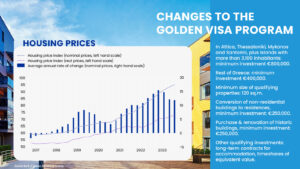
To better channel foreign interest in Greek real estate, the government has announced fresh changes to the Golden Visa program effective March 31. In the most sought after property markets – around greater Athens, greater Thessaloniki, Mykonos, Santorini, as well as islands with a population of over 3,100 inhabitants – the minimum threshold for securing a Golden Visa through real estate acquisition has been increased to €800,000. In other areas the threshold is €400,000.
But for industrial buildings that are converted into housing, and for historic buildings, the minimum threshold is €250,000. The government has also introduced incentives to convert non-residential buildings into homes, and for the conservation and restoration of historic buildings. The new rules also require that residential real estate acquired by investors be at least 120 sq.m. and explicitly prohibits its use for short-term rentals.
The Greek government is planning to raise the minimum threshold for Golden Visa applicants investing in real estate to €800,000 in high demand areas, Prime Minister Kyriakos Mitsotakis said in remarks to Parliament. The move reflects the ongoing success of the program, which has brought in more than €1.5 billion in investment since it was launched in 2014. Last year, the government doubled the minimum threshold to €500,000 for qualifying properties in the center of Athens and Thessaloniki, as well as the popular tourist islands of Mykonos and Santorini.
Welcome to our cherished heritage property, a place where cherished memories and family history intertwine. This house holds a special place in our hearts as it is a legacy passed down from my beloved father. With great love and respect, we have meticulously renovated and restored this home, ensuring that its character and charm remain intact while offering modern comfort. Each corner of this house tells a story, and we invite you to create your own unforgettable moments within its walls. As you stay here, we hope you feel the warmth and love that we have poured into this place, honouring the memory of our father and creating a space for new memories to be cherished for years to come.
Escape to the tranquility and natural beauty of our cozy cottage, nestled in the heart of Ermionida region. Perfectly situated to offer both relaxation and adventure, our cottage is an ideal getaway for couples, families, or friends looking for a memorable vacation. Inside, you’ll find a warm and inviting space that blends rustic charm with modern comforts. Continue reading »
Όταν 4 καταξιωμένοι διεθνώς Αρχιτέκτονες έρχονται στην Ελλάδα, είναι νέο. Διαλέξαμε και παρουσιάζουμε αποφθέγματα από αυτή τη διάλεξη στους φοιτητές μας των Αρχιτεκτονικών Σχολών…
“Το να σχεδιάζεις ένα κτίριο δεν απελευθερώνει απλώς τη δημιουργικότητά σου, πρέπει να εκλαμβάνεται και σαν κοινωνική και πολιτιστική ευθύνη”
“Η διαρκώς μεταβαλλόμενη εικόνα μιας πόλης σε ωθεί να σκεφτείς πως η αρχιτεκτονική είναι πλέον ένα μέσο προβολής και εντυπωσιασμού”
“Eίμαστε καλλιτέχνες; Όχι, οι αρχιτέκτονες αγωνιούν για δημιουργική έκφραση αλλά η δουλειά μας θεμελιώνεται πάνω σε αντικειμενικά κριτήρια. Παρέχουμε υπηρεσίες; Σε ποιον; Στον πελάτη; Αν σκεφτούμε πως από την ιδέα μας και την υλοποίησή της δεν εξαρτάται μόνο αυτός που μας πληρώνει, αλλά δυνητικά ο κάθε χρήστης, το κοινό, ο πολίτης, αμέσως μεγαλώνει ο αριθμός των ανθρώπων στους οποίους είμαστε υπόλογοι” Continue reading »

 ΝΙΚΟΣ ΜΑΡΚΑΤΟΣ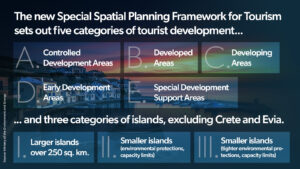
 Θα ήθελα να ευχαριστήσω θερμά την εταιρεία

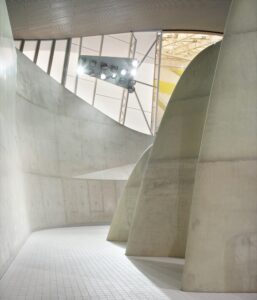 The Hellenic Statistical Authority (ELSTAT) announces the results of the Building Activity Survey for December 2024.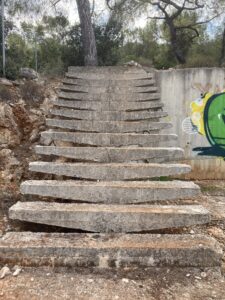
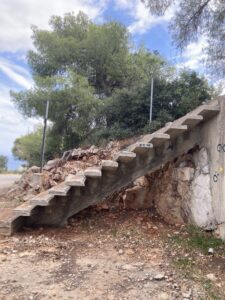
 The Greek government is planning to raise the minimum threshold for Golden Visa applicants investing in real estate to €800,000 in high demand areas, Prime Minister Kyriakos Mitsotakis said in remarks to Parliament. The move reflects the ongoing success of the program, which has brought in more than €1.5 billion in investment since it was launched in 2014. Last year, the government doubled the minimum threshold to €500,000 for qualifying properties in the center of Athens and Thessaloniki, as well as the popular tourist islands of Mykonos and Santorini.
 Welcome to our cherished heritage property, a place where cherished memories and family history intertwine. This house holds a special place in our hearts as it is a legacy passed down from my beloved father. With great love and respect, we have meticulously renovated and restored this home, ensuring that its character and charm remain intact while offering modern comfort. Each corner of this house tells a story, and we invite you to create your own unforgettable moments within its walls. As you stay here, we hope you feel the warmth and love that we have poured into this place, honouring the memory of our father and creating a space for new memories to be cherished for years to come.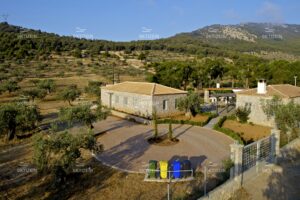
 Όταν 4 καταξιωμένοι διεθνώς Αρχιτέκτονες έρχονται στην Ελλάδα, είναι νέο. Διαλέξαμε και παρουσιάζουμε αποφθέγματα από αυτή τη διάλεξη στους φοιτητές μας των Αρχιτεκτονικών Σχολών…